

I spent years waking up with a stiff lower back and telling myself it was just “getting older.” The real problem was the mattress. It looked supportive in the shop, felt firm enough, yet it allowed my hips to sink and my spine to twist every night. Only when I switched to a proper back support sprung mattress did the morning stiffness start to fade. If you are dealing with ongoing back discomfort or simply want to protect your spine for the long term, the mattress under you is one of the most important decisions you will make.
Key Takeaways
- Neutral spinal alignment and targeted lumbar support matter more than extreme firmness for most people with back issues.
- Coil gauge is usually a stronger indicator of lasting support than raw spring count.
- Matching firmness to both body weight and sleeping position prevents the pressure points that worsen back pain.
- Quality pocket sprung or hybrid models with denser comfort layers often deliver better long-term back support than pure foam or cheap open-coil mattresses.
- Simple maintenance—rotation, a good protector, and a solid base—can keep a back support sprung mattress performing for 10–15 years.
Table of Contents
- What Is a Back Support Sprung Mattress?
- In My Experience, Most Back Pain Starts With the Wrong Mattress
- How a Back Support Sprung Mattress Protects Your Spine While You Sleep
- Understanding Every Spring System Before Buying
- Honestly, I Made This Mistake Too—Ignoring Mattress Materials
- What Most People Get Wrong About Mattress Firmness
- Which Mattress Is Best for Your Sleeping Position?
- This Is Where Things Get Real—Features That Actually Improve Back Support
- I've Seen This Happen Many Times—Why Mattresses Stop Supporting Your Back
- Coil Count vs Coil Gauge
- Pocket Sprung vs Orthopedic vs Hybrid vs Memory Foam
- Luxury Back Support Mattress vs Budget Mattress
- Most People Ignore This Part—Mattress Certifications That Matter
- Step-by-Step Guide: How to Choose the Best Back Support Sprung Mattress
- Comparison Table—Best Spring Systems for Back Support
- Pros and Cons of Back Support Sprung Mattresses
- Real-Life Buying Scenarios
- Beginner Mistakes That Make Back Pain Worse
- How to Keep Your Mattress Supportive for 10–15 Years
- AI Tools That Help You Choose the Right Mattress
- Mobile Apps That Can Improve Sleep & Back Health
- Decision Framework—Which Back Support Mattress Fits You Best?
- Frequently Asked Questions
What Is a Back Support Sprung Mattress?
Quick Definition
A back support sprung mattress uses engineered steel coils combined with targeted comfort layers to maintain neutral spinal alignment, support the natural lumbar curve, and relieve pressure points. Quality models prioritise consistent firmness, durability, and even weight distribution so the spine stays in a healthy position throughout the night.
Why Proper Back Support Matters Every Night
When the spine is allowed to sag or twist, muscles stay tense and discs experience uneven load. That tension often shows up as morning stiffness or lingering discomfort. A well-designed back support sprung mattress reduces those stresses so the body can recover instead of fighting poor posture all night.
Quick Answer Box
- Best for: people with lower back discomfort, desk workers, side and back sleepers needing alignment.
- Ideal firmness: medium to medium-firm for most adults.
- Expected lifespan: 10–15 years with proper care.
- Recommended spring type: pocket sprung or hybrid with good coil gauge.
- Average price range: £600–£2,500 for reliable support.
In My Experience, Most Back Pain Starts With the Wrong Mattress
After testing dozens of mattresses and speaking with people who struggled for years, the same mistakes appear again and again.
Buying the Cheapest Mattress Instead of the Right One
Budget mattresses often feel firm in the store then develop soft spots that allow the hips to sink. That sink is exactly what aggravates the lower back.
Believing Firmer Always Means Better
I used to think maximum firmness equalled maximum support. In reality, too firm creates new pressure points at the shoulders and hips, forcing the spine out of alignment.
Ignoring Sleeping Position
Side sleepers need more cushioning to keep the spine straight. Stomach sleepers need enough resistance to stop the hips dropping. Position mismatch is one of the fastest ways to create or worsen back pain.
Choosing Based Only on Spring Count
High spring counts look impressive on the label. Thicker coil gauge and proper zoning usually deliver more reliable long-term support.
Forgetting That Body Weight Changes Mattress Performance
A mattress that supports a lighter person can feel too soft for someone heavier. Weight matching is essential for consistent alignment.
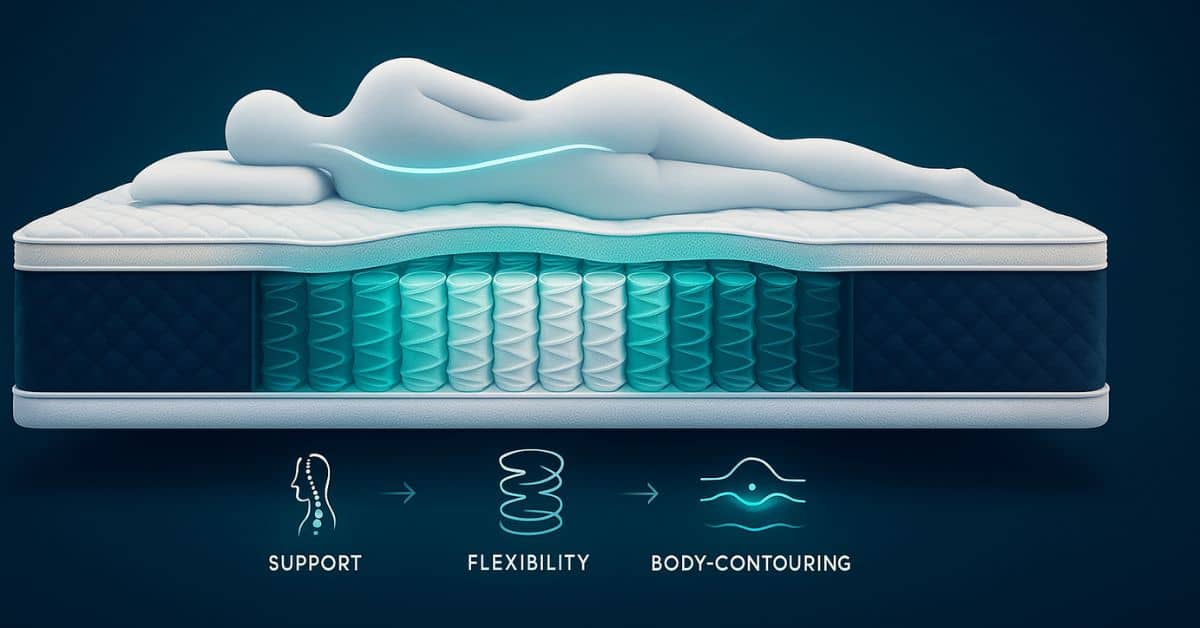
How a Back Support Sprung Mattress Protects Your Spine While You Sleep
Maintaining Neutral Spinal Alignment
The goal is a straight line from head to hips whether you sleep on your side or back. Responsive coils help maintain that line as you shift during the night.
Supporting the Lumbar Curve
Zoned or reinforced lumbar areas fill the natural hollow in the lower back so the spine does not flatten or arch excessively.
Reducing Pressure Points
Even distribution of weight stops shoulders and hips from becoming focal points of tension that pull the spine out of place.
Distributing Body Weight Evenly
Quality spring systems spread load across a larger surface rather than letting it concentrate in the middle.
Minimizing Tossing and Turning
When pressure and alignment are correct, the body needs fewer adjustments. Fewer movements mean deeper, more restorative sleep.
Improving Sleep Recovery
Muscles that stay relaxed overnight recover better. Many people notice reduced morning stiffness once the mattress stops working against their spine.
Understanding Every Spring System Before Buying
Pocket Sprung Mattress
Individually wrapped coils move independently. Strong motion isolation, good pressure relief, excellent cooling when well made. High support potential with proper gauge. Lifespan 10–15 years. Mid to high budget. Ideal for most people seeking back support.
Open Coil Mattress
Connected coils. Responsive but weaker isolation and edge support. Shorter lifespan. Lower budget. Better for guest rooms than primary back support needs.
Continuous Coil Mattress
One continuous wire. Durable and inexpensive with limited contouring. Moderate support and cooling. Budget option for basic use.
Offset Coil System
Hinged design improves contouring over traditional Bonnell. Decent support and pressure relief. Less common as a pure system.
Micro Pocket Springs
Small coils for surface comfort layered over larger ones. Excellent pressure relief and cooling. Useful in hybrids for side sleepers with back concerns.
Hybrid Sprung Mattress
Pocket springs plus foam or latex. Balanced comfort and strong support. Good pressure relief and cooling when designed well. Lifespan 8–12 years. Excellent all-round choice for back support.
Orthopedic Sprung Mattress
Often firmer with enhanced lumbar zoning. Aimed at alignment. Support and pressure relief vary by brand quality. Choose carefully—some are simply firm without true ergonomic design.
Honestly, I Made This Mistake Too—Ignoring Mattress Materials
Materials decide whether a back support sprung mattress stays supportive or loses shape.
Natural Latex
Responsive, pressure-relieving, and durable. Helps maintain alignment while allowing airflow.
Memory Foam Comfort Layers
Deep contouring reduces pressure points. Can sleep warm unless ventilated or combined with springs.
Gel Memory Foam
Adds cooling to foam layers. Useful secondary feature rather than primary support driver.
Wool Fillings
Excellent temperature regulation and moisture control. Helps the surface stay consistent night after night.
Cotton Upholstery
Soft and breathable. Solid everyday comfort with good moisture handling.
Cashmere & Silk
Luxury temperature control and soft feel. Common in higher-end models.
Bamboo Fabric Covers
Soft, moisture-absorbing surface that stays cooler against the skin.
Premium natural layers hold their structure longer and keep the comfort zone working with the springs rather than against them.
What Most People Get Wrong About Mattress Firmness
Soft vs Medium vs Firm
Soft allows more sink. Medium balances contour and resistance. Firm resists sink more strongly.
Why Medium-Firm Often Provides Better Back Support
It usually keeps the spine neutral without creating new pressure points. Many people who start with very firm mattresses later discover medium-firm feels more supportive overall.
Choosing Firmness by Body Weight
Lighter people often need softer surfaces to achieve proper contouring. Heavier people need more resistance so the hips do not drop.
Choosing Firmness by Sleeping Position
Side sleepers: medium to medium-soft. Back sleepers: medium to medium-firm. Stomach sleepers: firmer to keep the hips level.
Firmness vs Support—They're Not the Same
Support is about alignment. Firmness is only one tool. A soft mattress with strong coils can support better than a rigid surface that forces the body into awkward positions.
Which Mattress Is Best for Your Sleeping Position?
Side Sleepers
Medium pocket sprung or hybrid with enough cushioning at shoulders and hips to keep the spine straight.
Back Sleepers
Medium-firm with clear lumbar support so the lower back is filled without excessive arching.
Stomach Sleepers
Firmer models that prevent the hips from sinking and creating swayback.
Combination Sleepers
Responsive hybrids that allow easy movement while maintaining alignment in multiple positions.
Heavy Individuals
Thicker-gauge coils and higher-density comfort layers to resist excessive compression.
Lightweight Sleepers
Softer surfaces so they still achieve the contouring needed for neutral alignment.
Couples
Strong motion isolation from quality pocket springs. Also read: Best Sprung Mattress for Couples (2026): Sleep Better Together Without Motion Transfer, Back Pain, or Overheating
Seniors
Medium firmness with reliable edge support for easier entry and exit, plus good pressure relief.
This Is Where Things Get Real—Features That Actually Improve Back Support
Zoned Support Systems
Different coil tensions under shoulders, lumbar, and hips keep the spine better aligned through the night.
Lumbar Reinforcement
Extra resistance or denser layers in the lower back area fill the natural curve.
Pressure Point Relief
Proper comfort layers stop shoulders and hips from becoming sources of tension that pull the spine out of place.
Edge Support
Reinforced borders expand the usable surface and make sitting or getting out of bed more stable.
Motion Isolation
Pocket springs reduce partner disturbance that can cause micro-awakenings and muscle tension.
Responsive Spring Systems
Easy movement without the “stuck” feeling of some foam beds helps maintain natural sleep posture changes.
Breathable Construction
Airflow prevents overheating that leads to restless tossing and secondary back strain.
Noise-Free Performance
Quality pocket springs remain quiet, avoiding sleep interruptions that leave muscles more tense.
I've Seen This Happen Many Times—Why Mattresses Stop Supporting Your Back
Coil fatigue from thin gauge wire, foam compression in low-density layers, progressive sagging, weak edge support, poor bed bases, and low-density materials all erode alignment over time. Prevention is practical: choose thicker gauge coils, rotate on schedule, use a protector, ensure the base is solid, and control bedroom humidity. These steps often preserve support for a decade or more.
Coil Count vs Coil Gauge
Coil gauge usually matters more than spring count for lasting back support. Thicker wire resists permanent compression better.
| Coil Count | Coil Gauge | Support Quality | Durability | Comfort | Pressure Relief | Value |
| High (2000+) | Thin (15–16) | Variable | Moderate | Softer surface | Good initially | Lower long-term |
| Moderate (1000–1500) | Thick (12–14) | Strong | High | Balanced | Excellent | High |
| Lower count | Very thick | Excellent | High | Firmer | Good | Strong |
Also read: Pocket Sprung vs Memory Foam Mattress: Which One Is Actually Better for Your Sleep in 2026?
Pocket Sprung vs Orthopedic vs Hybrid vs Memory Foam
| Feature | Pocket Sprung | Orthopedic | Hybrid | Memory Foam |
| Back support | High | High (when well designed) | High | Variable |
| Pressure relief | Good | Good | Excellent | Excellent |
| Cooling | Excellent | Good | Good | Can sleep warm |
| Motion isolation | Very good | Good | Very good | Excellent |
| Durability | High | High | High | Moderate |
| Lifespan | 10–15 years | 10–15 years | 8–12 years | 7–10 years |
| Bounce | High | Medium-high | Medium-high | Low |
| Maintenance | Rotate | Rotate | Rotate | Minimal |
| Price | Medium-high | Medium-high | Medium-high | Medium |
| Best user | Most positions | Alignment-focused | Combination | Side sleepers |
Luxury Back Support Mattress vs Budget Mattress
Premium construction invests in thicker gauge coils, denser natural fillings, precise zoning, reinforced edges, and longer warranties. These elements keep alignment consistent for years. Budget models often rely on thinner wire and softer foams that lose shape sooner. Over a decade the higher-quality option usually costs less per night of supportive sleep.
Most People Ignore This Part—Mattress Certifications That Matter
- CertiPUR-US: foam free from certain harmful chemicals.
- OEKO-TEX Standard 100: textiles tested for harmful substances.
- GOTS: organic fibres processed to strict environmental and social standards.
- Fire safety standards: UK compliance, preferably with minimal chemical treatments in better models.
- Organic certifications: confirm natural material claims.
These labels verify safety and processing rather than guaranteed pain relief.

Step-by-Step Guide: How to Choose the Best Back Support Sprung Mattress
Step 1: Identify your main pain area (lower back, mid-back, or general stiffness).
Step 2: Determine sleeping position.
Step 3: Assess body weight.
Step 4: Choose the spring system—pocket sprung or hybrid for most people.
Step 5: Select firmness level matched to position and weight.
Step 6: Evaluate comfort materials—prefer denser latex or quality foam with natural fibres.
Step 7: Compare coil gauge (12–14 preferred for longevity).
Step 8: Check certifications for material safety.
Step 9: Review warranty length and sleep trial terms.
Step 10: Compare overall value by expected years of supportive sleep, not just purchase price.
Comparison Table—Best Spring Systems for Back Support
| Spring Type | Lumbar Support | Pressure Relief | Cooling | Motion Isolation | Durability | Maintenance | Cost | Best For |
| Pocket Sprung | High | Good | Excellent | Excellent | High | Rotate | High | Most sleepers |
| Hybrid | High | Excellent | Good | Very good | High | Rotate | High | Pressure relief needs |
| Orthopedic | Very high (when zoned) | Good | Good | Good | High | Rotate | Medium-high | Alignment focus |
Pros and Cons of Back Support Sprung Mattresses
Pros
- Better potential for neutral spinal alignment
- Excellent airflow compared with many foam beds
- Responsive support that reduces unnecessary tossing
- Long lifespan when well constructed
- Strong edge support in reinforced models
- Suitable for a wide range of sleepers
Cons
- Higher-quality models cost more upfront
- Heavier than pure foam mattresses
- Require periodic rotation
- Support quality varies significantly by construction
Real-Life Buying Scenarios
Office worker with lower back pain: medium-firm pocket sprung with clear lumbar zoning. Also read: Best Pocket Sprung Mattress for Back Pain (2026 Guide): What Actually Helped My Lower Back, Sleep Quality & Morning Stiffness
Side sleeper with shoulder discomfort: medium hybrid with plush comfort layers over supportive coils.
Couple with different comfort preferences: high-isolation pocket sprung or dual-firmness options.
Heavy sleeper needing extra support: thicker-gauge hybrid with denser comfort layers.
Senior requiring pressure relief: medium firmness with strong edges and good contouring.
Luxury hotel-style bedroom: hand-tufted premium models with natural fillings and precise zoning.
Budget-conscious family: solid mid-range pocket sprung with a reputable warranty rather than the cheapest option.
Beginner Mistakes That Make Back Pain Worse
- Buying by price alone
- Ignoring lumbar support features
- Choosing firmness without considering position and weight
- Believing marketing claims without checking construction
- Ignoring body weight
- Skipping sleep trials
- Overlooking certifications
- Forgetting regular maintenance
How to Keep Your Mattress Supportive for 10–15 Years
- Rotate every three months for the first year, then every six months
- Always use a quality mattress protector
- Inspect the bed frame or base for solid, even support
- Clean according to manufacturer guidance
- Control bedroom humidity
- Avoid sitting in the same spot every day or allowing uneven weight distribution
AI Tools That Help You Choose the Right Mattress
AI mattress recommendation platforms, sleep posture analysis tools, smart comparison tools, AI shopping assistants, and sleep coaching apps can narrow options and highlight patterns. Benefits include personalised matching based on pain location and sleep data. Limitations remain: algorithms cannot feel the mattress for you, and privacy of health or sleep data should be reviewed carefully.
Mobile Apps That Can Improve Sleep & Back Health
- Sleep tracking apps to understand real patterns and awakenings
- Posture monitoring apps for daytime habits that affect night-time comfort
- White noise apps for consistent sleep environments
- Smart alarm apps that wake during lighter stages
- Mattress shopping and comparison apps
- Price comparison tools for sales on shortlisted models
Decision Framework—Which Back Support Mattress Fits You Best?
Start with the location of any back discomfort, then match body weight and sleeping position. Factor in temperature preference, motion sensitivity if sharing the bed, budget, preferred firmness, and how long you want the mattress to last. A medium-firm pocket sprung or hybrid with 13-gauge coils, clear lumbar support, and quality comfort layers covers the majority of people effectively. Persistent or severe pain should still be discussed with a healthcare professional.
Frequently Asked Questions
What is a back support sprung mattress?
A mattress built with steel coils and targeted comfort layers designed to maintain neutral spinal alignment, support the lumbar curve, and reduce pressure points during sleep.
Can a sprung mattress reduce back pain?
Many people experience reduced morning stiffness and better comfort when the mattress keeps the spine neutral. Results vary and professional advice is recommended for ongoing pain.
Which firmness is best for lower back pain?
Medium to medium-firm works for most adults, adjusted for body weight and sleeping position.
Is a pocket sprung mattress better than memory foam?
Pocket sprung often provides better airflow and easier movement. Memory foam can offer deeper pressure relief. Choice depends on personal preference and temperature sensitivity.
What is lumbar support?
Extra resistance or denser materials in the lower-back zone that help fill the natural curve of the spine.
Does coil gauge matter more than spring count?
Yes, thicker wire generally maintains support longer than high counts of thin coils.
How many springs should a quality mattress have?
For a double, 800–1,500 well-made coils are usually sufficient when gauge and zoning are appropriate.
Should I buy an orthopedic mattress?
Only if it offers genuine zoning and quality construction. Some are simply firmer without better ergonomics.
How long does a quality sprung mattress last?
10–15 years is realistic for well-constructed models with proper care.
Can a mattress improve posture?
It can help maintain healthier spinal alignment during sleep, which may reduce strain. Daytime posture habits still matter.
Which mattress suits side sleepers with back pain?
Medium pocket sprung or hybrid with enough cushioning at the shoulders and hips to keep the spine straight.
When should I replace my mattress?
When morning aches increase, visible sagging appears deeper than a couple of centimetres, or the surface no longer recovers after pressure.
Choosing a back support sprung mattress in 2026 is about matching construction to your spine, not chasing the firmest feel or the highest spring count. Prioritise coil gauge, lumbar zoning, and a firmness that keeps your back neutral. Use a proper trial period, rotate regularly, and protect the mattress from moisture. Do those things and you give your spine the best chance of comfortable, restorative nights for years ahead. Start by noting your main pain area, sleeping position, and approximate weight, then shortlist two or three models that meet the construction standards above. Better mornings often begin with better support under you tonight.